Sunday, April 18, 2021

World Amateur Radio Day 2021

Hello, World! Happy World Amateur Radio Day 2021. It's a bright and sunny day here in Michigan. At this very moment, I'm listening to radio from all around the world. 

On my right is a Yaesu FT-991A. This radio is capable of working all amateur radio bands from 160 meters (1.8MHz) to 70 cm (440MHz). I started the day spinning the dial and poking around the ham bands before suddenly feeling the Shortwave Listening (SWL) bug tugging at my arm. Simultaneously working the VFO knob on the radio and the big capacitor on my indoor magnetic loop antenna (CHA F-Loop 2.0), I pulled in a variety of stations and finally settled on some Radio Marti. Even though I do not speak the tiniest bit of Spanish, it was interesting to hear the energy in the speaker's voice and I did notice a couple of references to John F Kennedy. I can only imagine what was being said. It would be interesting to have someone translate what I was hearing. 

In any case, I decided to write something about a new ham radio rabbit hole that opened beneath my feet and has taken me for a ride. That rabbit hole is shaped like the internet and has Yaesu Fusion/WiresX, D-Star, and DMR written all over it.

In honor of World Amateur Radio Day, I decided to complete a project that had been on the back burner for a little while. Not long ago, I decided to try out one of those infamous digital voice "hot spot" devices. Being the owner of both the Yaesu FT-991A base station and the Yaesu FT-3DR handheld radios, the new digital modes have been accessible to me for quite some time. Admittedly, my initial thought was that these modes would not interest me. However, I almost immediately discovered that there is much fun to be had if you decide to connect a Yaesu Fusion/WiresX (C4FM) capable radio to a Pi-Star device and begin chatting with people around the world.

Connecting to the FCS00290 - America-Link-WiresX reflector brought to me the voices of people right here in Michigan talking with hams in Turkey, Japan, and Australia. I almost couldn't believe it. While it's definitely not the same magical experience as chatting with folks around the world using nothing but 100 watts and a wire in the air, these digital voice modes that connect people all over the world via the internet certainly do have a magic of their own. In my opinion, it's all good and it's good for us all. 

If you are wondering what the the fuss is about, maybe give it a try or find someone local that can give you a hands-on overview. You might just find another avenue through which to enjoy this wonderful hobby.

Have you tried any of these new digital voice modes? If so, which ones? Please comment below. Also, if you believe that these "internet" modes are "not ham radio" please take this opportunity to present your side of the story and comment below.

Ultimately, Amateur Radio is a science hobby. So, go ahead and science the heck out of it!

Have a good one and 73,
Don KC7ZXY

KC7ZXY on QRZ.com - https://www.qrz.com/db/KC7ZXY


Friday, January 5, 2018

KC7ZXY Activity in 2017 - WARNING: Low Radiation Level Detected

A thought that often comes to mind, "What have I done for Amateur Radio lately?"

Unfortunately, for 2017, I have not done enough. Responsibilities and obligations related to job and family took higher priority during a rather busy year. This is not to be regretted, however, as it corresponds with the Amateur's Code as written in 1928 by Paul M Segal (W9EEA).
BALANCED: Radio is a hobby, never interfering with duties owed to family, job, school or community.
Although I am not pleased to say that my activity level was very low this past year, I will not lament on the topic any further. The future is before me and the possibilities are endless.

The main accomplishment of 2017 was that I renewed my General Class License. This was an easy process which did not cost a thing. If you are nearing the end of your license period, please refer to the following directions and web links. Keep your license up-to-date and keep active!
To renew, go to the ULS Home, select Online Filing, and follow the instructions below. Login to the ULS License Manager with your FCC Registration Number (FRN). From your License At A Glance page, choose the Renew link in the right hand menu called Work on this License.
FCC License Renewal Web Link 
Today, I also renewed my membership in the ARRL - The National Association for Amateur Radio (also known as the American Radio Relay League). If you are an Amateur Radio Operator and are not yet a member of the ARRL, I highly recommend becoming a member. There are many benefits to membership and, at the very least, join to get the monthly QST publication. It has tons of Amateur Radio news, opinions, and product reviews as well as contest and event information. For me, it is the "go to" source of Ham Radio happenings!

For the coming year, there are at least a few Ham Radio goals in my mind. Near the end of 2017, I traded in my vehicle and have not yet moved the mobile rig to the new vehicle. This transportation upgrade presents some new challenges and I look forward to working out a solution. Adding to the "get-on-the-air" difficulties, the base station in my home--which has been disconnected for far too long--will need a refresh and reconnect. I have a big, new, outdoor antenna to install but the extreme cold in Michigan this winter is making it "easy" to hang out indoors.

...hmmm, "if only" I had refreshed the base station before the weather turned so bitterly cold. :-)

In the meantime, my trusty old Kenwood dual-band handheld is warming up on the charger.

While sitting here at the computer, suddenly I'm thinking it's time to make a move toward trying out one of the Internet-friendly digital options that are available these days such as the very popular Echolink! ...time to take a look at that

Thanks for tuning in and keep coming back!

73,
KC7ZXY
Donald Watkins

► Twitter: @KC7ZXY
► Google+: +KC7ZXY 
► YouTube: KC7ZXY Tube

Monday, September 19, 2016

The Origin of My Interest in Amateur Radio

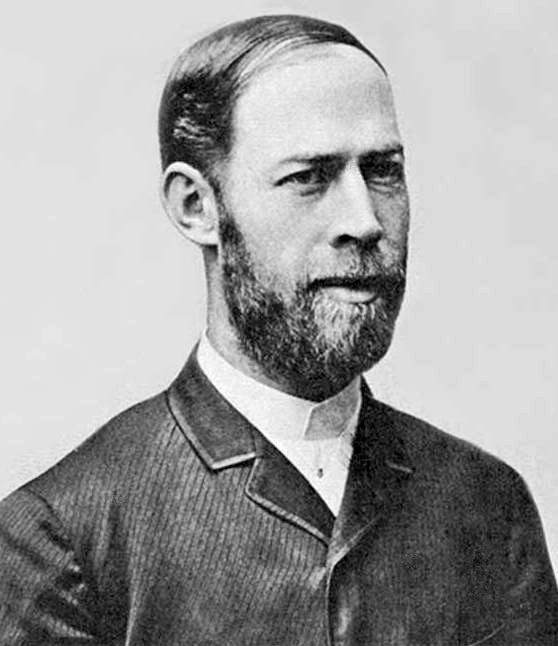
Heinrich Rudolph Hertz
Although Amateur Radio has been around since the first decade of the 1900's (and some may say it traces all the way back to when Heinrich Rudolph Hertz proved the existence of radio waves in 1888), the Amateur Radio hobby was not something with which I would become familiar until my first year in college.

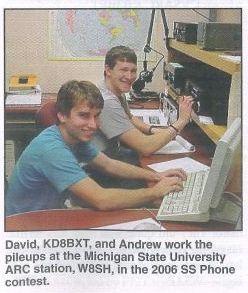
At the end of a long hallway, near the many electrical engineering labs found within Michigan State University's College of Engineering, there existed an small and mysterious room. Every so often, I would pass by that alluring chamber when the door was slightly ajar and I would sneak a cautioned peek inside that often darkened space. Behind that heavy wooden door, was an enigmatic realm filled with the warm glow of CRTs, LEDs, vacuum tubes, and the strangely comforting smell of warm electronics.

Strangers and fellow classmates sometimes speculated that this room was the home of the MSU Amateur Radio Club. Of course, I had to find out what was going on in there and it turned out that the speculations were correct! This room was, indeed, the home of MSU's very own Amateur Radio Club.

The Michigan State University Amateur Radio Club (MSUARC) was founded in 1919 and is one of the oldest university clubs in the United States of America. 

 Follow MSUARC on Twitter

The sounds emanating from that mysterious domain were reminiscent of the Apollo space program and the activities of that endeavor were the backdrop of my childhood. Though the voices spoke of things about which I did not understand, they reminded me fondly of many childhood experiences. 

My father was an outdoors man, hunter, and avid "off road vehicle" (ORV) enthusiast. Over the years, his adventures necessitated the installation and use of a series of citizen's band (CB) radios. He and his fellow sportsman spent many hours perfecting their radio installations so they could get the clearest and strongest signal possible. Antenna and feed line length, their placement, and their quality were of utmost importance. Field strength meters were often utilized to optimize antenna lengths to match the precise frequency of the channel that was most used by my father's group of like-minded individuals.

The crackling sounds drifting from the depths of that arcane space in the halls of the Engineering building reached deep into my psyche and evoked memories that were not limited to the memories of my father. My maternal grandfather was a long-haul truck driver and, of course, this meant that he was also a seasoned installer and user of citizen band radio equipment. However, the deepest memories being reflected upon here were driven by the many evenings my grandmother would spend at home, by herself, while Grandpa was out on the road.

As a measure of comfort, my grandfather installed a small collection of police scanners around the house (living room, kitchen, and bedroom) so that my grandmother could listen in on the activities of police and emergency responders local to her area. Peace of mind was gained in knowing that Grandma might be able to learn of potential dangers from extreme weather or the activity of criminals before any trouble arrived at her home.

Hearing the short bursts of concise communications and the sound of abbreviated language coming from that small room in the Electrical Engineering building brought back visions of staying up late drinking root beer, eating oatmeal cookies, and following the staccato drama crackling through granny's many scanners.

At this point, the reader might be thinking that I was driven to enter the mysterious room at the end of the hall in the Engineering building. It would seem natural that my warm memories and the curiosity of it all would drive me to ask if I could take part in whatever was going on in that room. Alas, this was not to be case for, at that time in my life, fear was my master. I could not bring myself to enter the room nor even knock on the door and ask for assistance. It is clear to me today just how unfortunate it was that I allowed this type of fear to grip me so deeply. I now know that the people behind that door would have welcomed my visit and would have encouraged me to join their worldwide fellowship of Radio Amateurs.

KC7IIB AG
It would be many years before I found myself in front of a Volunteer Examiner Coordinator (VEC) and inquired about taking the FCC test and asking how to apply for my first Amateur Radio license. That story is probably worth a blog post of it's own. There is much on which to reflect when telling that part of the tale.

The short version of that story, of which at this time I will only briefly speak, is that while working as a computer programmer and IT support specialist, I felt my electronics knowledge was beginning to fade and I was seeking greater technical challenges. At that same time, my interest in hiking and biking brought me back to the world of CB, FRS/GMRS, and scanner radios. After some rather interesting adventures in the wilderness, carrying a handheld CB radio became a matter of safety. A radio is a tool for survival.

One day while messing around with a scanner, I came across some mysterious communications. At first I thought it was coded speech and, perhaps even, the work of some nefarious spy network! I laugh at the thought now. It wasn't long before I realized that the frequencies to which I was listening had been allocate to radio hams (Amateur Radio Operators). Those voices from long ago and far-away had returned to my ears.

Research showed that I would need to review and study a variety of electrical engineering concepts, learn some operating rules, locate a Volunteer Examiner Coordinator, and take a test in order to join the wide world of Amateur Radio. This sounded just like the kind of challenge for which I was looking! The rest is history and it is a story that will be told another day.

Amateur Radio has done a lot for me and I'm hoping that one day I will be able to put gratitude into action and return the favor! What can I do for Amateur Radio today?

Keep your tubes warm!

73,
KC7ZXY
Donald Watkins

► Twitter: @KC7ZXY
► Google+: +KC7ZXY 
► YouTube: KC7ZXY Tube


Saturday, April 2, 2016

Kenwood EMC-3 Clip Microphone with Earphone | Unboxing and First Look Review

(see video link below)
Having recently returned to the world of Amateur Radio, I've been dusting off, tuning up, and in some cases restoring my old equipment to proper working order.

The Kenwood TH-D7A 2m/70cm dual band handheld radio has long been my go-to favorite. This well used radio is still running strong even though it has outlived it's manufacturing lifetime. Yes, the TH-D7A has been replaced by a newer model. In any case, my D7A has many years of useful service still left in it.

Kenwood TH-D7A and EMC-3
At some time in the past, I owned a convenient lapel mic which had a high quality earphone attached to it. This microphone, the Kenwood EMC-3, also sported a well placed push-to-talk (PTT) switch on the side of the mic. Unfortunately, this wonderful microphone could not be found no matter how deeply I searched my old bins and boxes. Alas, it was time to search the Internet for a replacement.

Transcontinental Shipping!
A quick look at the Kenwood Amateur Radio headset webpage revealed many newer model headsets (such as the KHS-26) that would certainly have met my needs. However, my hope was to find a replacement for my tried-and-true device. Although the EMC-3 is no longer available from the manufacturer, I was still able to order one from Amazon.com. The delivery took an unusually long time to arrive but this was really no surprise once I realized that the piece would be shipped from a supplier in Japan.

Amazon and the supplier were very proactive with regard to informing me of the shipping details, approximate deliver date, and tracking information. The item arrived in perfect working order and the packaging, by itself, was a real treat with it's international labeling. I'm not sure why I enjoyed the shipping labels so much but, for some reason, it was a joy to see a package from so far away arrive at my doorstep.

The mic and earphone connector
The TH-D7A has a fairly standard 3.5mm TRS (tip-ring-shield) jack for the combined microphone/PTT input. However, for some reason the earphone jack requires the smaller (yet still fairly standard) 2.5mm TR plug. The EMC-3 employs a sturdy combination connector which holds both of these plugs in a rigid piece of rubberized plastic. The plugs are perfectly spaced and snap into place in such a way that the cable rises upward toward the top of the radio. This helps to keep the cord out of the way and is a smart design considering that may users will have this radio clipped to their belt with the cord running up toward their ear and mouth.

In the linked video, you will see the first opening of the original shipping materials and experience the the first look at this device along with me. The viewer will also get a glimpse of the TH-D7A radio in action.


Although this particular model of Kenwood handheld Amateur Radio has been discontinued, you may still be able to find a used one online or at an Amateur Radio swap-meet. You might even consider purchasing one of the newer models (such as the TH-D72A with built-in GPS) and enjoy all the new features available on those devices. Either way, if you are interested in Kenwood handheld Amateur Radios and their accessories, check out the video and let me know what you think in the comments below.

Purchase on Amazon.com (affiliate)...
Kenwood EMC-3 Mic - http://amzn.to/2vscto7

Thanks for visiting this page and I hope you enjoy the video. Please hit the like buttons and share these blogs and videos with your friends, family, and colleagues. Most of all, Keep Coming Back!

73,
KC7ZXY
Donald Watkins

► Twitter: @KC7ZXY
► Google+: +KC7ZXY 
► YouTube: KC7ZXY Tube

Source Links...
Kenwood EMC-3 at Amazon.com
Kenwood Headsets at Kenwood Website 
Kenwood Amateur Radios

Friday, March 25, 2016

Comet SMA-24 Unboxing and First Look

(see video link below)
Comet Original SMA-24
146/446 Dual-Band High Gain Antenna
Unboxing and First Look Review

Now that I've been getting back into Amateur Radio and have been spending more time with my gear, the decision was made to upgrade the antenna on my trusty Kenwood TH-D7A.

The stock antenna on the TH-D7A is actually quite good and has a sturdy build. The quality of the antenna was never in question. However, those stock antennas are designed toward a trade-off size between "long enough" to pull in a good signal and "short enough" to be portable and convenient to work with in a portable, handheld radio.

Inevitably, whether an Amateur Radio operator, a Shortwave Listener, an SDR enthusiast, or a fan of scanners, the curious among us will always seek to pull in more signal as we reach for those far away and elusive transmissions.

I'd been taking my handheld Kenwood TH-D7A to work so I could listen to a local 2 meter repeater which belongs to a club that I'm interested in joining. My goal was to monitor the repeater for a while to get a feel for the operating style preferred by the users of that repeater. I also thought it might be a good idea to determine the activity patterns of the repeater and maybe see if I could pick up a few call signs before jumping on the air.

The distance to the repeater from my work place and the physical structure of my building reduced the reception of that repeater's signal down to an almost unusable state. It was a struggle to get the radio into a position where the squelch would stay open while people were conversing on my favored repeater. Something needed to be done.

Many years ago, I had purchased the Comet SMA-24 (or something very similar to it) and had used it with a different handheld radio. My memory told me that the increased length of the SMA-24, as compared to the stock antenna, showed a significant increase in received signal strength. I could no longer find that antenna among my collection of parts, so I searched Amazon just to see if it was there (see links below).

It turns out that Amazon had the antenna and since my Prime account meant that I'd get free shipping, I placed the order. I am quite happy with the results. Not only was the antenna delivered quickly and in excellent condition, it has demonstrated the improvements in signal reception that I was hoping to realize.

With this new antenna, that repeater is pushing a clear and strong signal into my radio. With a small, mono earbud shoved in my ear, I'm good to go! And not only does the new antenna allow reception of the signal I was hoping to receive, it has greatly improved this radio's overall signal quality. I'm pulling in much more than ever before. While inside my work place, that radio used to sit mostly silent with the squelch opening mainly to the occasional burst of random noise. Now I am pulling in communications across all bands!

The Comet SMA-24 has a length of about 17 inches and acts as a 1/4 wave on 146MHz for a gain of 2.15dBi. Meanwhile, on 446MHz it shows a gain of 3.4dBi and acts as a 5/8 wave radiator. The manufacturer states that the maximum power that should be put into this antenna is 20 Watts.

All in all, I have to say that I am very happy with this purchase and would recommend this antenna to anyone interested in improving the signal gain of their handheld radios or RTL-SDR devices.

I hope this video helps those who might be thinking of purchasing the Comet SMA-24 dual band antenna or those who may be interested in the reliable Kenwood HTs.


If you enjoyed this video, please let me know by hitting the like button and sharing a comment below.

As always, please feel free to share the video and this blog with friends, and remember to subscribe to the KC7ZXY YouTube channel if you'd like to see more videos like this one!

Purchase on Amazon.com (affiliate links)...
Comet SMA-24 Antenna - http://amzn.to/2vCggiT

Thanks for visiting. Keep coming back!

73,
KC7ZXY
Donald Watkins

► Twitter: @KC7ZXY
► Google+: +KC7ZXY 
► YouTube: KC7ZXY Tube

Other Links:
Comet SMA-24 on Amazon.com
Comet Antenna Website
Kenwood Amateur Radio Website

Sunday, February 28, 2016

RTL-SDR "Ham it Up" Upconverter Unboxing and Case Assembly

As many Amateur Radio, Shortwave, and Scanner Enthusiasts will tell you, things can get arguably more interesting as we lower the frequency to which we listen. Down there, among the well known Amateur Radio and Shortwave bands, some mysterious and possibly clandestine signals can be found.

Have you ever heard a "Numbers Station" or an offshore pirate radio broadcast? Have you ever heard those seemingly unidentifiable sounds while scanning down toward frequencies where no one has gone before?

Very often those mysterious noises are of earthly origin and most are not so secret. Many of them are simply modulated in a fashion not often employed by the more familiar commercial broadcasts.

Now enter the world of Software Defined Radio where, if you can receive the radio signal and get it into your computer, you can find some software that will decode that modulation and retrieve the intelligence buried within that signal.

The increasingly available and strikingly affordable RTL-SDR USB dongle which has been getting a lot of attention these days has a lower limit to the radio frequencies it can capture and digitize. This limit is typically around 25 MHz. If you wish to explore the lowest frequency bands then you must augment your SDR equipment.

Now enter the world of superheterodyne receivers and the "Ham it Up!" upconverter available from NooElec. That little gem is the subject of this unboxing and assembly video. Actually, the upconverter board, itself, requires no assembly. Since this board is sold without an external enclosure, I chose to order the optional extruded aluminum case which is also available from NooElec.

This video does not cover software installation nor will it demonstrate the use of this device and the additional frequencies that can be received when using it. This video covers only a physical review of the parts and components and serves to document the build experience.

All in all, I was very impressed with the quality of construction and attention to detail that was given to the development of these components.

However, there is one small exception to my overall satisfaction with the enclosure kit as delivered. The kit did not include screws of the proper size to allow the board's standoffs to be attached to the case. This was a surprise because the standoffs aligned with some holes in the case which appeared to be intended for this use. This may have been a simple packaging and shipping oversight. It was not a big problem but it is worth noting.

As assembled using only the parts delivered with the kit, the board sat just slightly loose in the case because it was only being held in place by the mechanical connections provided by the switch, antenna jacks, and USB hardware. The entire assembly rattled a bit when shaken. You can see this in the video (below).


A careful search of my extensive collection of "extra" screws and other spare parts produced a set of screws that fit the standoffs and provided the necessary rigidity of assembly. Unfortunately, these screws were not countersink screws and they protrude from the bottom of the case. I had intended to add some rubber feet to the bottom of the case anyway, so this does not really matter much.

As you can see in the video (linked above), the device powers up and behaves as expected (short of actually testing its ability to pull signals out of the air). A future video will include step-by-step software installation instructions as well as provide a demonstration of how to use this new piece of hardware.

Thanks for visiting. If you enjoyed the video, please click the "like" button and remember to subscribe to the YouTube channel to receive notice of future content. Please comment below if you'd like to join the SDR revolution!

Purchase on Amazon.com (affiliate links)...
NooElec RTL-SDR - http://amzn.to/2v9vOb4
Ham-it-Up Upconverter - http://amzn.to/2udRUvy
Ham-it-Up Case - http://amzn.to/2udrOJi

Keep coming back!

73,
KC7ZXY
Donald Watkins

► Twitter: @KC7ZXY
► Google+: +KC7ZXY 
► YouTube: KC7ZXY Tube

Other Links...
RTL-SDR Blog - http://www.rtl-sdr.com/
NooElec NESDR - http://www.nooelec.com/store/sdr/sdr-receivers/nesdr-mini-rtl2832-r820t.html
AirSpy.com (Free SDR Software) - http://airspy.com/download
Software Defined Radio - https://en.wikipedia.org/wiki/Software-defined_radio


Monday, February 22, 2016

RTL-SDR Unboxing and First Look Review

Free SDR Software (see links below)
The Power of Software Defined Radio (SDR) becomes affordable for anyone who has access to even a moderately powerful Personal Computer!

All that is needed is some free software from AirSpy.com and one of the widely available RTL-SDR (DVB-TV) devices.

A lot of good information can be found at http://www.rtl-sdr.com/rtl-sdr-quick-start-guide/ and many more locations on the Web.

The RTL-SDR device used in this video comes in the form of a USB dongle and was purchased from Amazon.com for around $20. It is listed as "NooElec NESDR Mini 2+ 0.5PPM TCXO USB RTL-SDR Receiver" and includes a simple antenna with a magnetic mounting base.

Once you become familiar with the software and the basic hardware, you will probably want to experiment with a more efficient antenna. However, if you are just starting out then this is the kit for you! Later, you may wish to add the NooElec "Ham it Up" upconverter to bring in the lower "World Band" HF signals. That device will be covered in greater detail in an upcoming blog and video post.

There is a remote control which comes with the NooElec NESDR device but it is not being used in this video. There are some videos on YouTube which demonstrate using the device with various SDR software products and I will almost certainly be experimenting with the remote further down the road.

In the video linked below, I unbox and take a quick first look at the NooElec NESDR Mini 2+. The initial trial run involved the use of an old Windows laptop which is nearing the end of its useful life. The laptop employed in this video serves as a sandbox within which the software and hardware can be safely tested and explored.

The segment of video which shows the SDR software at work had to be captured by pointing a camera at the laptop screen rather than being directly captured via software (or by using an external capture device). This created a less-than-optimal video appearance but it still allowed for a useful demonstration of the look and feel provided by AirSpy's free software.

Because the laptop test was successful and the software was deemed safe, the entire setup will be moved to a much more powerful desktop computer. This new computer will also be able to directly capture the entire desktop screen via the NVIDIA GPU's internal ShadowPlay feature.

A future video will include a demonstration showing how to acquire and configure the necessary software. Later videos will focus on specific software suites which can be used with the base system to further enhance the utility of this device. These upcoming videos and blog posts will explore subjects such as Amateur Radio, Weather Satellites, APRS Tracking, Slow Scan TV (SSTV), Emergency Responder communications, Radio Trunking, International Space Station communications and a wide variety of exciting applications.

The Parts in the Kit (see links below)
For now, please enjoy the unboxing and first look at the hardware and software that will enable even the casual user to achieve some spectacular results and explore the world of software defined radio. Go have some fun!

Please fee free to share this page and the linked video with your friends and family. As always, remember to subscribe to be notified of new content as it is released.

Purchase on Amazon.com (affiliate links)...
NooElec RTL-SDR - http://amzn.to/2v9vOb4
Ham-it-Up Upconverter - http://amzn.to/2udRUvy
Ham-it-Up Case - http://amzn.to/2udrOJi

Thank you for visiting and keep coming back!

73,
KC7ZXY
Donald Watkins

► Twitter: @KC7ZXY
► Google+: +KC7ZXY 
► YouTube: KC7ZXY Tube


Other Links...
RTL-SDR Bloghttp://www.rtl-sdr.com/
NooElec NESDRhttp://www.nooelec.com/store/sdr/sdr-receivers/nesdr-mini-rtl2832-r820t.html
AirSpy.com (Free SDR Software)http://airspy.com/download
Software Defined Radio - https://en.wikipedia.org/wiki/Software-defined_radio


Thursday, December 24, 2015

Amateur Radio Hamfests and Swap Meets

A local hamfest can be a great place to find electronic components and maybe even the inspiration you need to move forward with your own electronic adventures. These swap-meets are always a great source of new and used electronic gear of all types. You may discover far more than just a great bargain on that hard-to-find piece of amateur radio equipment. 

One of the clubs in my area, the Grand Rapids Amateur Radio Association, holds an annual swap-meet and ham festival. Their hamfest flyer states that it is a source for "electronics, amateur radio, shortwave, CB, computers, trains, airplanes, and just about anything with electrons in it!"

I have seen a variety of robots roaming around the grounds at more than one hamfest. You just might find those droids you've been looking for!

KC7ZXY is Back on the Air!

Is this frequency in use? This is KC7ZXY.

Nothing heard. CQ, CQ, Calling CQ. This is KC7ZXY, Kilo-Charlie-Seven-Zulu-X-ray-Yankee. Is there anybody out there?

Hello, and welcome to the new KC7ZXY Amateur Radio blog! I've been silent for a long while and it's high time I returned to one of my favorite hobbies. In fact, it is a hobby which encapsulates many of my other passions all within one convenient package. I have held a lifelong interest in electricity, magnetism, electronics, computers, software engineering, astronomy, audio/video production and the magic of all things wireless. What I have especially missed since I've been away from the shack and my workbench is the fellowship of this welcoming, resourceful, and always helpful community.